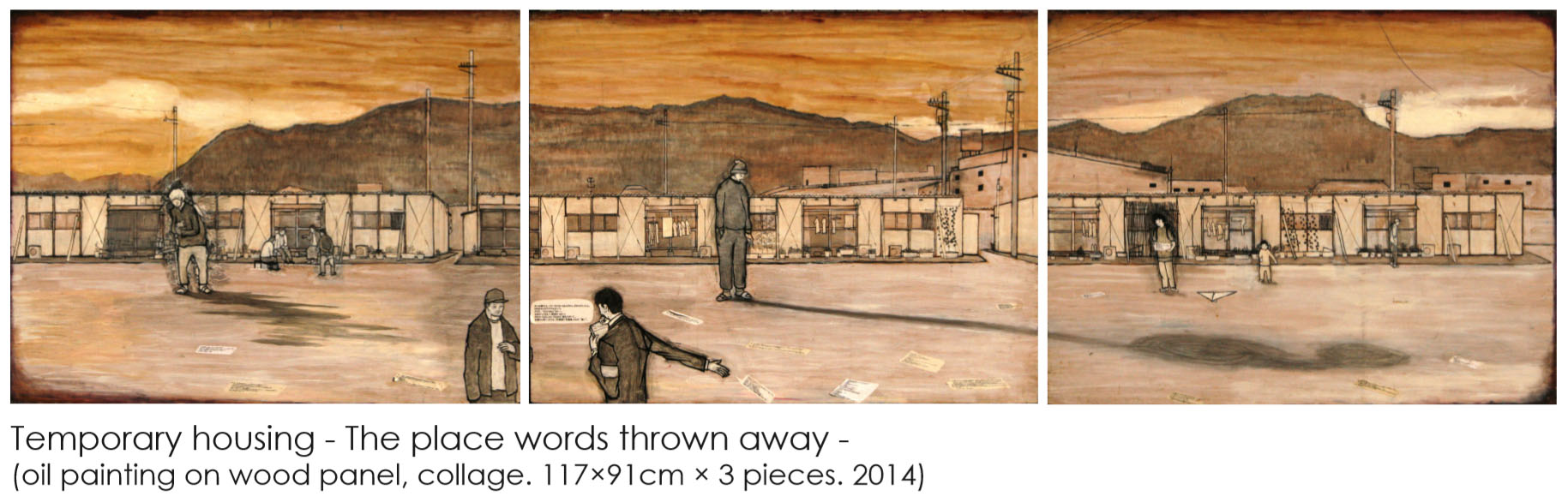
Temporary housing - The place words thrown away
(oil painting on wood panel, collage. 117×91cm × 3 pieces. 2014)
“Well, you know,
it is difficult to think that people who make news all year round can not understand what we’re really wanting to tell about.
Despite they know they it,
they cut important points for us finally.
So I felt that
“ what’s this? “
Main stream media’s work is something so bad, information is horrible...”
(A man who lived in a temporary housing in Fukushima. September 2015)
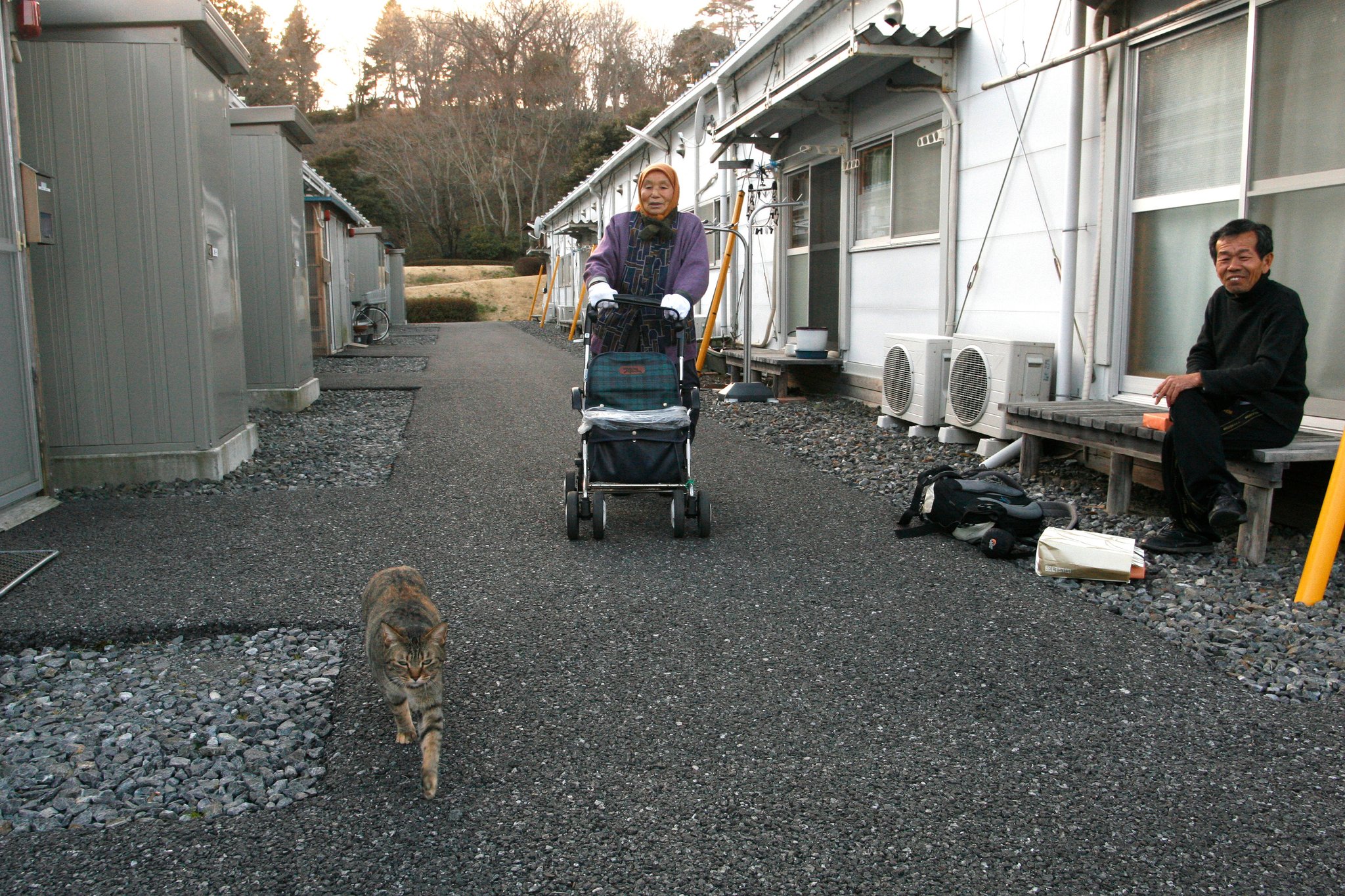
Residents who had been forcibly ordered to evacuate from their home towns after this radiation accident by the government
were to live in the house named <Emergency Temporary Housing> officially.
As you can see from this name,
the house was made as temporary house and at first the Japanese government had set it’s using limit two years.
But in reality in this temporary housings evacuators had kept living for six years since the accident.
Although from 2016 the evacuation order for those places started to take away,
however, some of the same-shaped houses are still scattered in Fukushima until 2018,
and many of them have not been able to move in seven years.
From 2014,
I began visiting to temporary housings of many towns repeatedly.
As time had passed by, the character of this place became clearer.
May be it is good news in a surface that evacuation order for people get taken away,
but in reality until 2018 there aren’t many people returning to towns they used to live.
Their towns had got changed among years after the accident to places where are no stores, no hospitals.
Especially, the proportion of young couples and young people with children is small.
For the elderly,
the new place where the temporary buildings existed and they had started to live was much useful places,
much closer to the big town, much closer to the big store, hospitals and the station.
The other hand,
their home town has changed it’s character while residents have evacuated.
In these towns dormitories for nuclear power plant workers and decontamination-related workmen were built,
and the proportion of these workers became rather large.
From 2012,
when decontamination activities were carried out by private companies,
the number of illegal involving by Japanese Yakuza gangsters in dispatching workers to the construction companies and illegal pay-out cases doubled.
According to the Japanese National Police Agency’s statistics,
the number of this kind of cases which previously committed before the accident in 48 prefectures had increased to double in a year from 2012.
And the participation rate of gangsters in this illegal moneylending case has exceeded 80%.
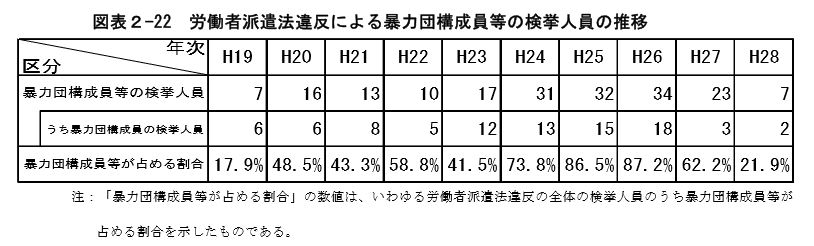
(source : in 2016 organized crime situation
[Confirmed value version]
Organized Crime Prevention Division of the National Police Agency)
It is easy to understand that in the background of bad tendency Fukushima’s radiation accident existed.
In the past,
though there were numerous reports of non-payment of wages for decontamination operations
and cases of violence including murder in Fukushima decontamination work,
these are only the tip of the iceberg.
If they didn’t the jobs that almost people didn’t want to do and on the other hand but that somebody had to do in the shade,
the situation of recovery of Fukushima could not proceed.
However,
the local people living in this temporary housings well knows the rough atmosphere these workers have.
Why evacuators prevented from returning to their home town?
Fear against such workers was another big reason for them.
But they got surrounded by envy of the local people in evacuating daily life,
local inhabitants regarded them as those who could get much money as compensation from government,
so they took distance from local inhabitant then they go isolated.
This was what they told me as their actually feeling.
When the evacuation order got lifted,
these people’s this kind of true feelings were not reported in news papers or TV.
Though media recorded,
they cut off it in editing work.
This manipulation by media had became a large part of their dissatisfaction itself.
<The place where real words got thrown away>
Gradually, I began to see temporary housing like that.
Like cities,
they had to live next door to each other in temporary housing,
and before the accident they were strangers to each other without knowing each faces and names.
Also to temporary housing life this kind of relationship was brought,
older men tend not to fit the change of situation and isolated.
I actually watched their lonely figures.

( text : Akira Tsuboi )

any commercial use by another is prohibited.